
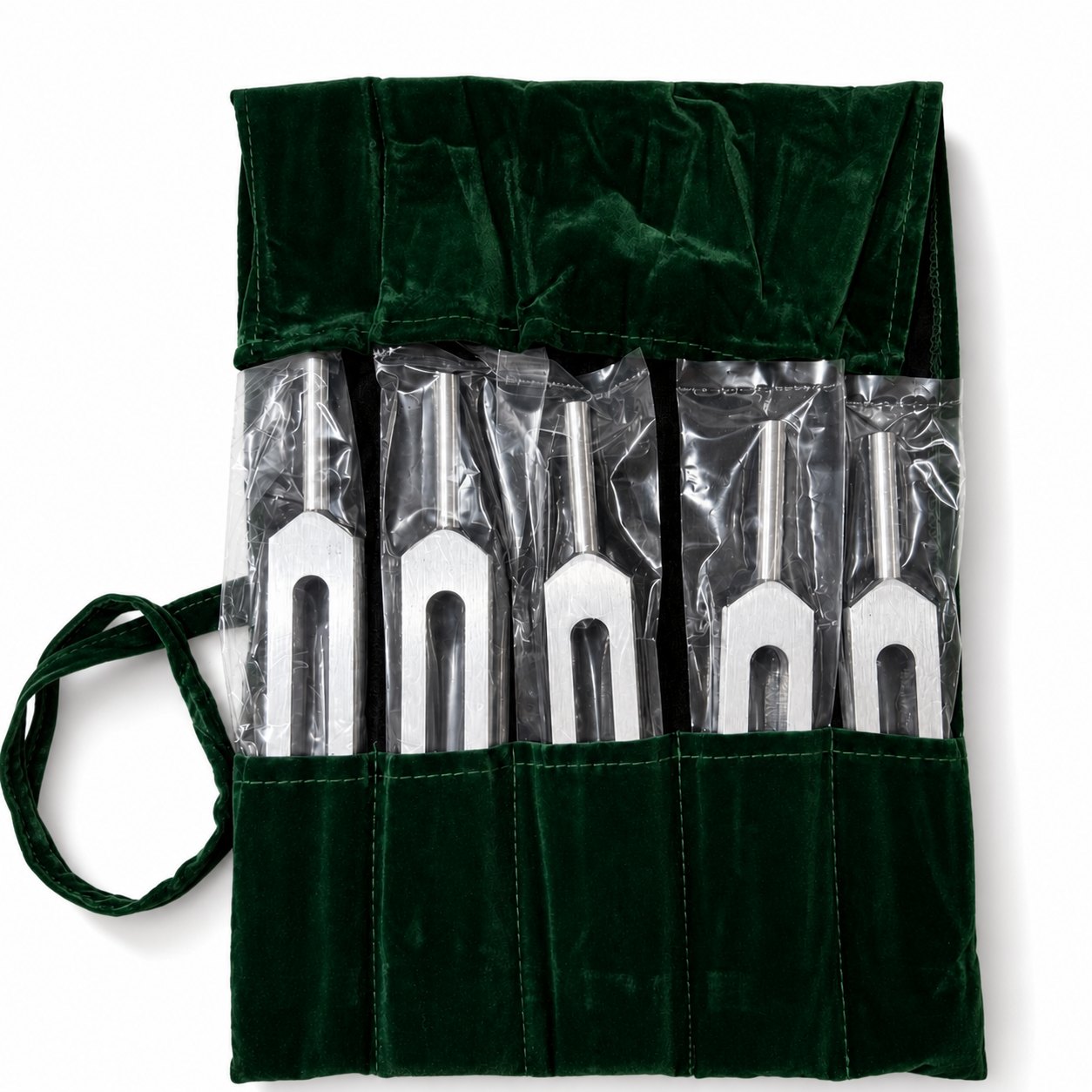
Modal Spectrum- Upgrade (set of 5) Unweighted
$129.95
Modes are ancient musical scales that create distinctive fields of sound through subtle shifts in tonal color. The Modal Spectrum™ Upgrade includes five tuning forks that expand the Solar Harmonic Spectrum™ and allow you to explore seven modes: Ionian, Dorian, Phrygian, Lydian, Mixolydian, Aeolian, and Locrian. Each mode creates its own ambient field of sound, rich with changing harmonics and tonal colors. Mindful listening invites you to experience the unique qualities traditionally associated with each mode and explore how the different patterns of sound resonate with you.
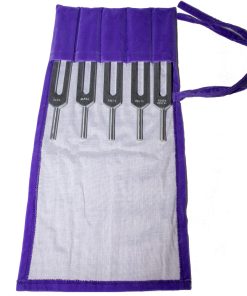
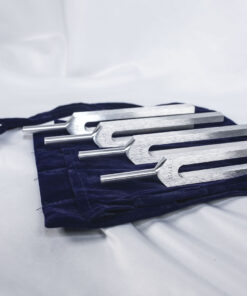
The Modal Spectrum™ Upgrade includes five tuning forks and comes with a dark green pouch.
In stock
Product guidance
Connect this BioSonics tool to practice, training, and support
Explore frequency education, setup resources, classes, and customer support for your BioSonics tools.
The Modes
The Modal Spectrum™ Upgrade adds five tones—D♭, E♭, F♯/G♭, A♭, and B♭—to the Solar Harmonic Spectrum™ to create a set of twelve tones. In Western music, these twelve tones form the chromatic scale. In terms of a piano keyboard, the Solar Harmonic Spectrum™ corresponds to the white keys, while the five additional tones of the Modal Spectrum™ Upgrade correspond to the black keys.
The Five Modal Spectrum™ Upgrade Tuning Forks
D♭ — 273.1 Hz — 16/15
E♭ — 307.2 Hz — 6/5
F♯/G♭ — 360 Hz — 45/32
A♭ — 409.6 Hz — 8/5
B♭ — 455.1 Hz — 16/9
The Modal Spectrum™ creates different fields of sound through subtle shifts in tonal color known as modes. The word chromatic comes from the Greek chroma, meaning “color.”
Modes have long been used in music to create distinctive moods and tonal qualities. Sounding the tuning forks in different modes creates changing fields of sound in which spontaneous melodic patterns can appear and disappear. Within the BioSonics approach, listeners are encouraged to notice and explore the tones and patterns that resonate with them.
Ionian (Mercury)
C – D – E – F – G – A – B
Intended to inspire clear communication and help bring thoughts together to reflect inner vision.
Dorian (Sun)
C – D – E♭ – F – G – A – B♭
Intended to awaken and clear the mind and may be especially suited for morning use. The Dorian mode has historical associations with Western modal and sacred music traditions.
Phrygian (Mars)
C – D♭ – E♭ – F – G – A♭ – B♭
Intended to awaken motivation and drive toward reaching a goal.
Lydian (Jupiter)
C – D – E – F♯ – G – A – B
Intended to promote positive feelings, happiness, and a sense of celebration of life.
Mixolydian (Saturn)
C – D – E – F – G – A – B♭
Intended to support focus and clarity.
Aeolian (Venus)
C – D – E♭ – F – G – A♭ – B♭
Intended to inspire artistic creativity through quiet, dreamy, and reflective moods.
Locrian (Moon)
C – D♭ – E♭ – F – G♭ – A♭ – B♭
Intended to create a calming, reflective atmosphere for unwinding at the end of the day.
Creating Modes
Creating modes is simple. Begin with the Solar Harmonic Spectrum™ tuning forks, which form the Ionian mode. Next, remove one or more tones and replace them with the appropriate Modal Spectrum™ tones shown above.
For example, to create the Dorian mode, remove E and B and replace them with E♭ and B♭.
To create the Lydian mode, remove F and replace it with F♯.
Always activate the modal tuning forks using C256.
Playing the Modes
On a Stand
The easiest way to play a mode is to place the modal tuning forks on a practitioner stand. Arrange eight tuning forks from C256 to C512 in the order of the mode you want to play.
Next, take a crystal or metal pendulum and gently swing it into the tuning forks to create sound. Tune in to yourself and/or the person or group you are working with. Allow your intuition to guide the movement of the pendulum as it sounds the modal tuning forks.
With a Concert Ball
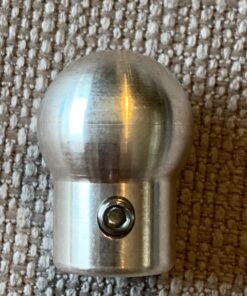
Insert the modal tuning forks into a Concert Ball and activate them using C256.
| Weight | 1.2 lbs |
|---|---|
| Dimensions | 8.5 × 4 × 4 in |
You may also like…
Specialty Products
$17.95


Specialty Products
$9.00

Specialty Products
$34.95
Related products
All Tuning Forks
$169.00

$85.00

Specialty Products
$210.00
$89.00


All Tuning Forks
$52.00
All Tuning Forks
Tuning Fork – “Unweighted” (528 Hz.)-(Now with sky blue pouch)
$50.95
Brain Tuners
$132.95

$105.00